Before buying lift kits and truck accessories in Reading, choose between a leveling kit and a full suspension lift. A leveling upgrade corrects factory rake while preserving daily performance, and a suspension lift kit adds clearance, wheel travel, and larger tire fitment. Collect precise year, trim, drivetrain, and suspension details to confirm Rough Country fitment. Budget for tires, alignment, and add-ons like steps, lights, or liners—you'll understand how the right setup comes together.
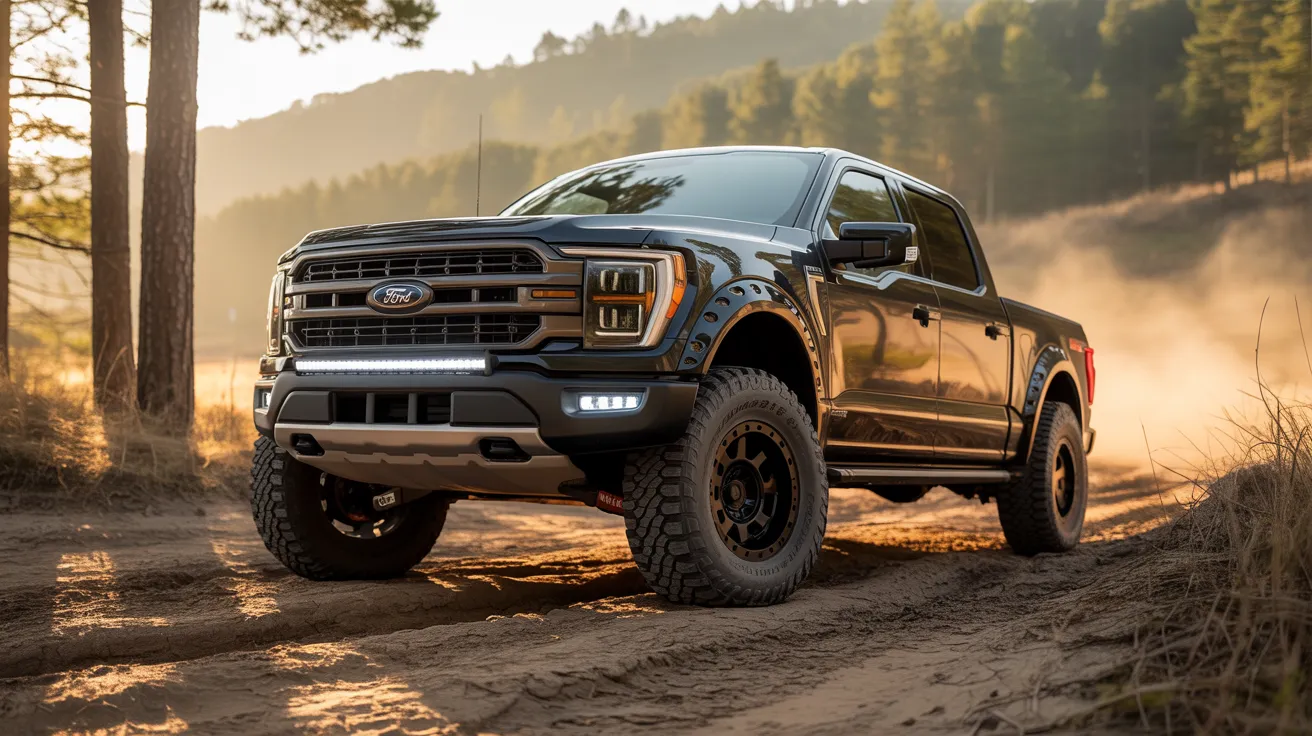
Key Takeaways
- Select a leveling kit to eliminate factory rake while preserving near-stock performance and allowing slightly larger tires for daily driving.
- Go with a suspension lift kit for enhanced clearance, suspension travel, and performance off-road, recognizing handling and steering may shift.
- Validate proper fitment using your truck's year, model, make, drivetrain, trim, cab, bed, and suspension type prior to ordering your Rough Country components.
- Select lift height and shocks based on your application, such as commuting, mixed trail use, towing, or serious off-road travel.
- Reserve budget for beyond the kit cost itself, including alignment, labor, wheels, tires, shocks, and extra accessories like steps, lights, and liners.
Suspension Lift Kits Against Leveling Kits
Although both modifications alter your truck's profile, leveling kits and suspension lift kits solve distinct issues and produce different results. A leveling kit usually raises the front to match the rear, correcting factory rake with little alteration to geometry, ride height, and daily drivability. You pick one when you desire a cleaner appearance and room for slightly larger tires.
A suspension lift kit raises the whole truck and changes critical parts to provide increased clearance and suspension travel. You'll notice bigger gains in ride height, off-road capability, and tire options, yet you will expect handling tradeoffs, steering changes, and a higher center of gravity. When you prefer mild visual correction, level it. If you require real clearance and articulation, apply a suspension lift and build the supporting mods around your use case.
What Rough Country lift kit is ideal for your truck?
Begin by determining your truck's year, make, and model, transmission type, and primary application, because Rough Country builds lift kits for exact geometric requirements and capability objectives. This foundation identifies mounting hardware and suspension elements can bolt on without clearance or geometric concerns.
Start by checking factory ride height, cab layout and cargo bed configuration, axle configuration, and if your truck runs 2WD, 4WD, or adaptive suspension. Rough Country fitment resources simplify this process, but you still need to confirm fitment accuracy versus trim-specific components and factory package variations. A kit that fits a Silverado 1500 doesn't fit a Trail Boss, and a Ram featuring air suspension demands different provisions rather than a vehicle with coil suspension. After checking fitment thoroughly, you prevent installation issues, compatibility issues, and return delays.
Determine which Rough Country lift kit matches your driving habits.
Match the kit to your actual driving habits, and you'll receive better ride quality, durability, and tire clearance without purchasing unnecessary capability. If commuting is your truck's main use, select a mild Rough Country leveling kit or a 2- to 3.5-inch suspension setup calibrated for daily comfort and stable steering response.
When you alternate between pavement and trails, go with a lifted suspension equipped with premium shocks and corrected control arm angles. You'll experience stronger off road handling, improved articulation, and capacity for bigger tires without overstressing OEM components. For heavier trail use, focus on raised struts, N3 and Vertex dampers, and lifts that maintain driveline geometry during compression. A quality Rough Country package should match load capacity, speed, and terrain, and how much ride firmness you'll actually tolerate.
Premium Rough Country Truck Accessories
Round out your new lift system using Rough Country upgrades that solve the actual issues you'll encounter after lifting and upgrading tires. Start with improved entry steps or skid plates, that restore ease of cabin entry and add undercarriage protection now that your truck sits higher and broader.
Next, prioritize
What's the Right Budget for Your Build?
Once you've selected the suspension kit and complementary components, establish a budget that exceeds the headline kit price. You'll require funds for shock absorbers, rims, tires, alignment services, labor, and any drivetrain or steering adjustments your platform needs. Manufacturer standing is important here; premium systems typically deliver tighter tolerances, superior ride comfort, and fewer install headaches.
For accurate cost estimates, expect entry-level spacer or leveling setups to start lower, while full suspension systems with control arms, tuned dampers, and larger tires climb quickly. Installation complexity, shop rates, and alignment calibration can add substantially. You should also budget for additional upgrades such as gear modifications, brake parts, and recovery equipment if you're building for trail use. If cash flow matters, compare payment plans thoroughly and focus on dependability over flashy add-ons.
Questions You Might Have
Will Lift Kits Change My Factory Warranty?
Yes, lift kits may impact your factory warranty coverage, however they don't automatically void it. You face warranty issues if a dealer demonstrates the lift modification brought about or contributed to a defect. Powertrain, steering, suspension, and drivetrain claims frequently create dealer disputes. You should keep installation records, use quality components, and follow service intervals. That helps you refute denied claims and safeguard warranty where the modification isn't at fault.
Do Larger Tires Require Re-Gearing My Truck?
Yes—if you increase multiple tire sizes, you'll usually need gearing changes. For example, when you move from 31s to 35s—your truck may feel underpowered, hunt for gears, and build drivetrain stress under strain. Gear ratio changes bring back correct gear ratios, allowing you to get back acceleration, towing performance, and transmission behavior. You may not require regearing for a minor upsizing, but if power, fuel economy, or shift quality drop, it's usually the right call.
When Should You Check Your Lift Kit?
You should inspect lift system components after the first 500 miles, subsequently at every oil change or 3,000 to 5,000 miles, depending on use. Routine inspections help you catch bushing wear, leaking shocks, bracket issues, and alignment problems early. Test bolt tension after hard off-road runs, towing, or impacts. When operating in mud, salt, or rough terrain often, reduce timing between inspections and inspect steering and suspension parts on a tighter schedule.
Will a suspension kit affect towing or payload capacity?
Yes, a lift system can affect your truck's towing and payload abilities. When you elevate ground clearance for more ground clearance, you change suspension angles, gravitational center, and component loading. That can decrease stability when carrying load and amplify drivetrain stress, particularly when using larger tires. You should follow your manufacturer's ratings unless an certified engineered kit clearly details upgraded ratings. Good alignment, gearing, and brake performance matter too.
Is Alignment Service necessary once you add truck upgrades?
Yes—if accessories alter ride height, suspension geometry, steering angles, or tire size, examine now you should get an alignment. You'll notice the impact right away: slight changes can pull your truck off-center, scrub tread, and compromise handling. A proper wheel alignment restores camber, caster, and toe to standard. After particular upgrades, you could also benefit from brake calibration for driver-assist accuracy. You protect tire life, steering sharpness, and genuine safety by performing alignment checks promptly.
Final Thoughts
Determining the right lift configuration and products relies on how you use your truck, your preferred stance, and your cost capacity. When you tune a Rough Country suspension within your driving approach, you'll experience performance, clearance, and looks that integrate seamlessly like a well-tuned drivetrain. Add smart accessories, plan your spend carefully, and you'll develop a truck remaining suitable for highways, formidable on trails, and ready for whatever job comes next.